

I worked for a friend who introduced me to sawmills and I eventually got one of my own; a cantilever-style sawmill. I completely rebuilt it and ran cantilever mills for many years. They’re good mills but there’s a lot of downtime because they require frequent alignment that takes a lot of time. I’d do adjustments on what I called ‘Adjustment day.’
I’d end up adjusting the side rails, leveling the wheels, squaring the backstops, adjusting belt tension, and more. All mills need adjustments but the way cantilever mills are built, if one part is out of adjustment, it throws other parts out and you have to go back and adjust them, too.
A friend of mine spent two whole days trying to adjust his cantilever mill. That’s a lot of downtime. And if your mill isn’t up and running, you’re not making money.

The other thing about cantilever mills is they’re ‘electric over hydraulic.’ Most components are tied to electric. That’s fancy and all that but if the mill’s computer breaks down, your cantilever mill is down. You’ve got to wait for electric repair parts then do the repair.
TimberKing needs much less maintenance than other mills
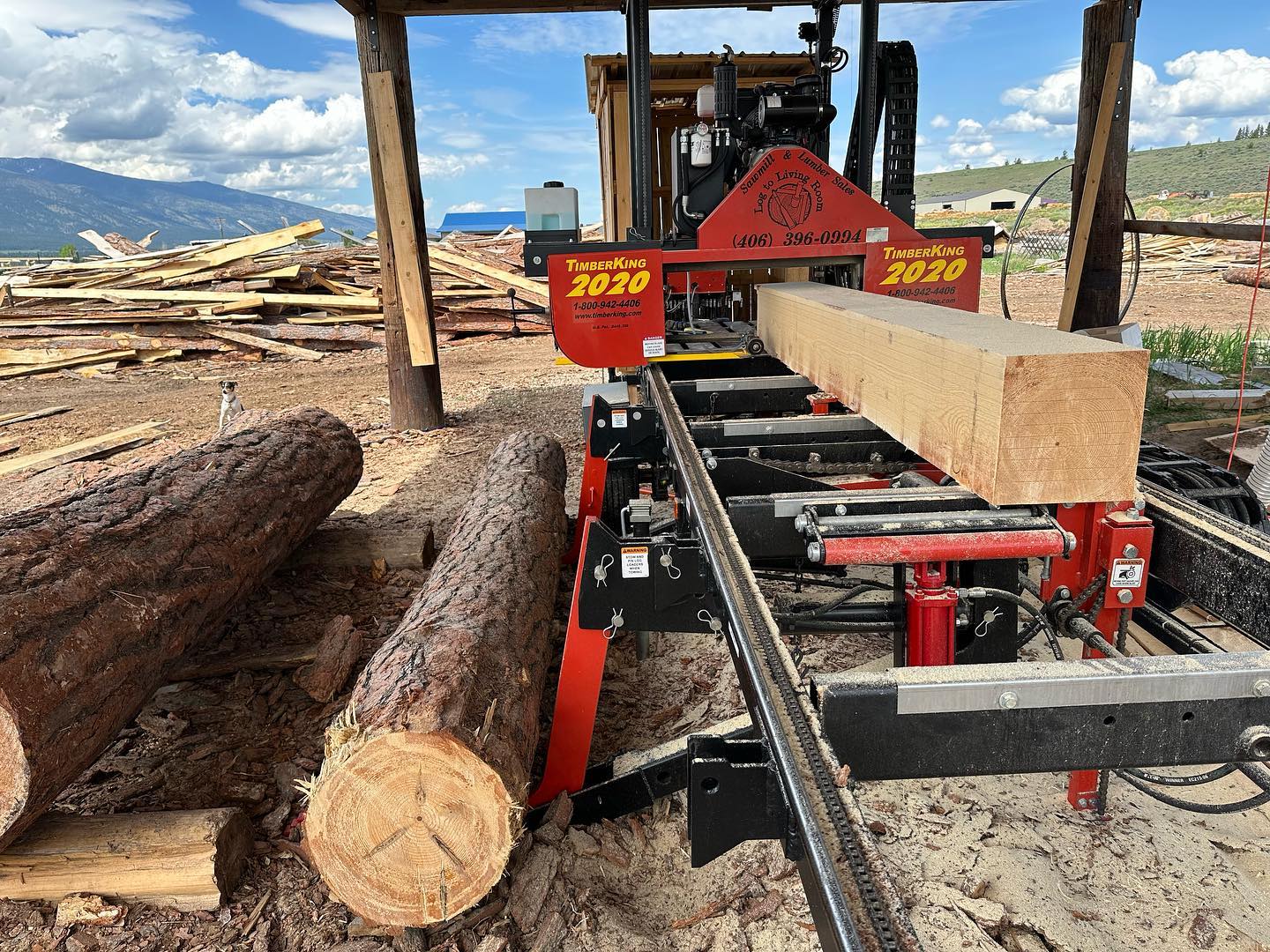
I switched to TimberKing because I got tired of doing the maintenance on cantilever mills. Now I do production sawing with my TimberKing 2020. If the TimberKing’s computer should ever go out, I can flip a switch and still run all the hydraulics. Its 4-post head doesn’t give at all, no play. Its fully welded frame makes it very stable.
The 2020 has full hydraulics and I’ll never again run a mill without them. Same with diesel – I’ll never saw with a gas engine again. TimberKing’s diesel Kubota engine has more torque than gas engines and I need that torque for production sawing. That diesel torque makes a smoother cut. It lets me run bigger logs, up to 38” max width. That width comes standard on the 2020 — you have to pay extra to get more width on a cantilever-style mill.
I’m sawing up to 16,000 board feet a month
I’ve been sawing a long time. I grew up in a little town in Mississippi where I came from a heavy construction background. As soon as I was old enough, my father had me out there running dozers and tractors. I wanted to learn about timber construction so I went to the American College of the Building Arts in Charleston, then the Island School of Building Arts in British Columbia.
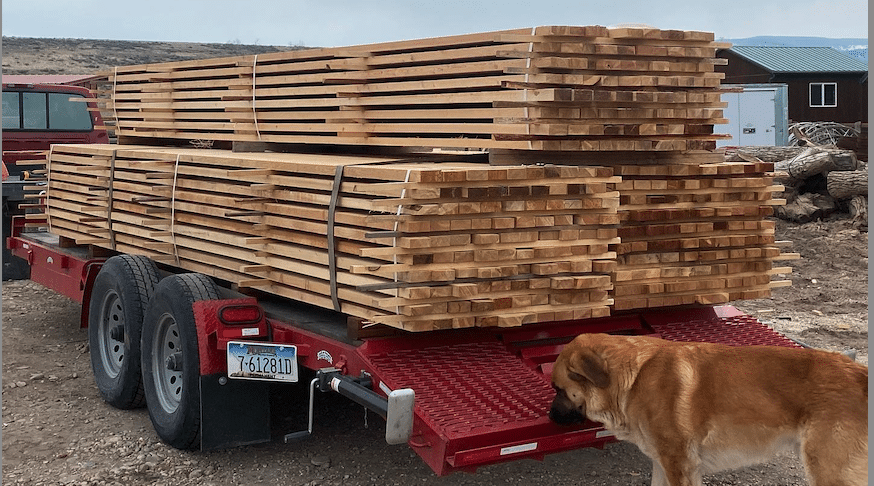
My business is Log to Living Room. I cut and sell lumber straight off the mill, 3,500 to 4,000 board feet a week. That’s 12,000 to 16,000 board feet a month. I buy logs by the truckload and sell lumber wholesale by the truckload to big contractors, developers, and more. I sell retail to woodworkers, cabinetmakers, and homeowners, too.
Full-time sawyer and TimberKing dealer, too

The Northwest United States has some of the biggest timber in the world but there was no TimberKing dealer here. While buying my 2020, I talked with Will Johnson, President of TimberKing, and became TimberKing’s Northwest dealer. That’s the northern Rockies, Montana, Idaho, and eastern Washington State. From the Dakotas to Utah.
Readers, how would YOU answer Joel’s questions?
Most guys I see like smaller TimberKing models because they want to build some specific project or do a little business. Those wanting to get into bigger production like bigger TimberKings. Here are questions I ask to help folks choose the model that’s right for them. What are your goals? What are you planning to do with a mill? One-man operation or a crew of four or five? Do you have a few trees or 100 acres of timber? What kind of timber will you saw? How long, how wide? What machine conveniences do you want? It’s all up to them.”
 — Joel Gordon, TimberKing 2020 Owner, Stevensville MT
Joel’s Sawing Business Facebook Instagram
Joel’s TimberKing Dealership Facebook Instagram
HAVE QUESTIONS? 3 ways we can help you
• Call us 1-800-942-4406
• Email us [email protected]
• Visit us on Facebook