


“I live in a small, remote town on the most northwestern tip of the continental USA. It’s in Washington state, right on the Pacific coast. I worked in the woods in the cedar industry for many years. We’d cut old cedar logs into blocks and bolts for cedar shingle siding and roofing. In the summer, I run my commercial charter fishing boat. I take folks out fishing for salmon, tuna, cod, and more.
1,300 acres of timberland
I have 1,300 acres of timber. Sounds like a lot but out here it wouldn’t even get an honorable mention! I’ve got cedar, fir, hemlock, spruce, and more. I wish I had more cedar, though. I fell the trees myself though I have help sometimes. And I’m sawing logs into clear, vertical-grain tongue and groove beams and siding. I saw construction-grade lumber, framing, posts, fence posts, and more.

I built a couple of big garages recently. One was 60’ x 24’ and another was 60’ x 36’. My daughter started a commercial nursery and I built a 24’ x 24’ covered pavilion for her business. My next project is sawing out materials for a 28’ x 32’ addition to my son’s cabin overlooking the ocean from a high bluff.

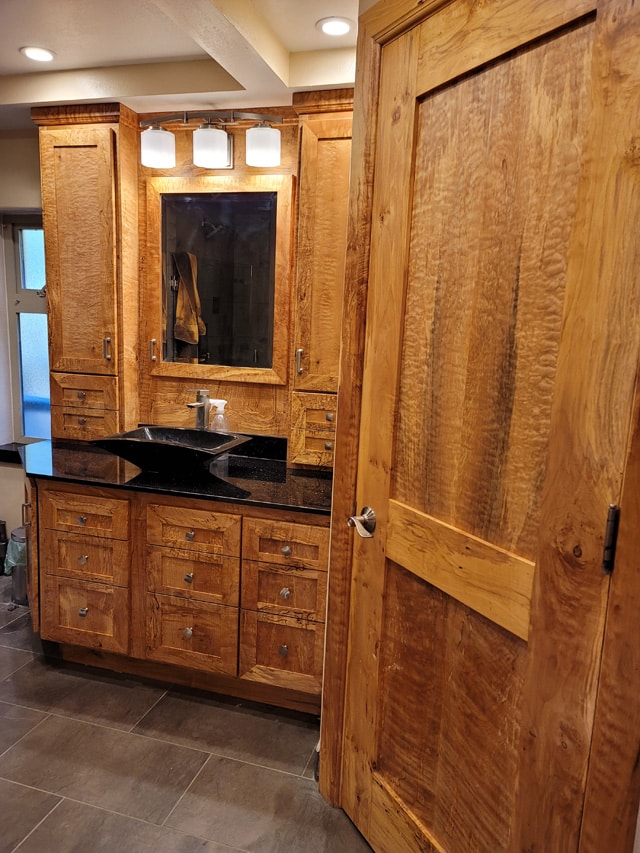
I’ve also done some sawing for myself. I cut some figured maple into 1/4” thick sheets – my mill will cut wood that thin. A friend does custom marine woodwork and installed it in my fishing boat. I built my own solid wood doors and cabinets for my home, too.
Word gets around
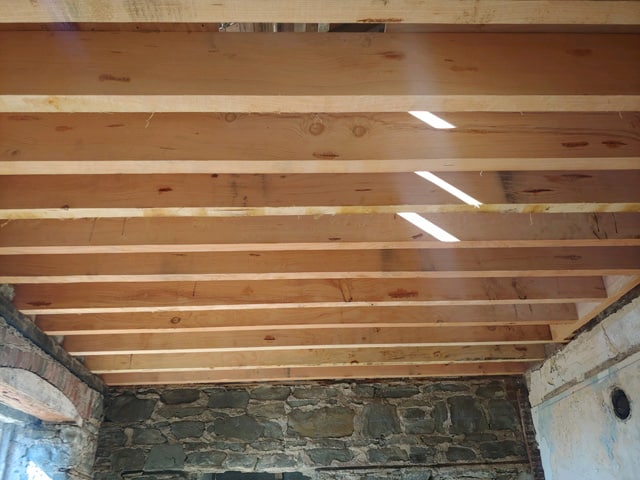
Word gets around and I’m starting to get requests to do more commercial sawing now. My first commercial job was sawing beams for a restoration project on the Cape Flattery Lighthouse located on Tatoosh Island just off the Washington coast. The lighthouse is part of the National Trust for Historic Preservation. I sawed 2-3/4” x 10” cedar beams 10’, 12’, and 16’ long. The people doing the restoration couldn’t find beams like that because there’s a lumber shortage out here due to Covid. I sawed the beams and hauled some to the island by boat. Others were helicoptered in.
BIG timber country
We have big timber here in the Northwest. The big log in the photo is about 36” diameter. I had to trim and turn it to get it through the sawmill’s 39” throat. The big commercial sawmill plants here don’t want to saw anything bigger than 28” diameter. They’re just not set up for them so there’s no commercial value for anything larger than 28.” I sell logs under 28” and keep the big ones and saw them up on my TimberKing.
Other mills too slow, too small, too wobbly
I once had an Alaskan sawmill but it was way too slow. I had a Wood-Mizer® mill but it was too small for my logs – I had to rip them in half to saw them. And the Wood-Mizer’s cantilevered head is wobbly. That’s why I ended up with a TimberKing 2200 sawmill. I can saw big logs on my TimberKing and it really speeds things up. I can cut a lot more wood per hour than with the Wood-Mizer. And TimberKing has a 4-post head that makes cutting more stable than a Wood-Mizer.

I’ve been around equipment all my life. Because we’re so isolated up here, you have to learn to do your own repairs. Maintenance on the TimberKing is very simple and I like that. It’s simple to set up, move, and replace wearing parts. I haven’t had much downtime at all. I like TimberKing’s heavy construction, the 4-post head, and the 24’ bed. I’ve owned it for 3 years and have had no trouble with it.
First-Class Delivery & Setup
I went to the factory in Kansas City so see them for myself. Then I had the mill delivered. Delivery was prompt and first class. The guys completely set it up for me and took me through operation, maintenance, how to transport, everything. The tech guys at TimberKing are very accessible for questions and even helped me do troubleshooting over the phone when I’ve needed it.
I think TimberKing is worth the investment, even if you’re just sawing for yourself.”
— Dan Greene, TimberKing 2200 Owner, Neah Bay WA
HAVE QUESTIONS? 3 ways we can help you
• Call us 1-800-942-4406
• Email us [email protected]
• Visit us on Facebook