
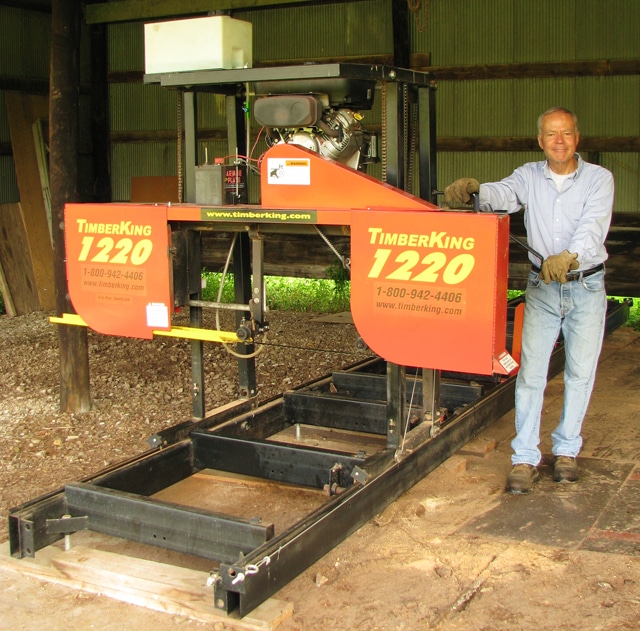
Mike Trial has recently been named Missouri’s Tree Farmer of the Year. He manages 2,000 eastern black walnut trees on his 147-acre tree farm. Mike tells us it’s a small operation and that’s the way he wants it. The goal is to pay the taxes. “There’s no market for small quantities of black walnut sawlogs,” he says. So he adds value by sawing his logs into lumber with his TimberKing sawmill and selling the boards locally.
“Dear TimberKing,
I was just awarded the Missouri Tree Farmer of the Year award. As you know, I use a Timberking 1220 I bought from you in 2016 to saw our farm’s walnut trees into boards.
I grew up here on our family farm in Columbia, Missouri. My dad bought 147 acres when we moved here in 1956. He started planting walnut trees back in 1967 and now I’m managing 2,000 walnut trees on 50 of those acres.
Small-scale operation, low cost and sustainable
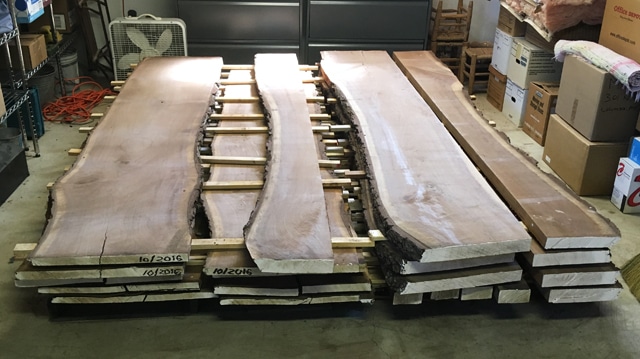
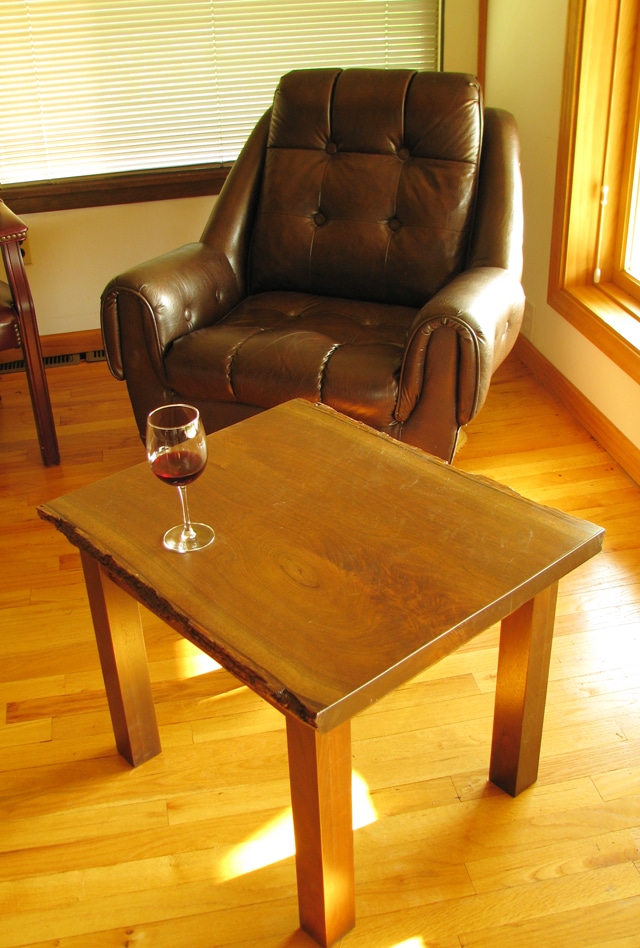
Neither Dad nor I ever made a living from our trees, nor did we plan to. But our goal has always been for the farm to pay for itself. I have no large-scale plans and I’m very happy with that. I saw an average of 50 to 75 small logs a year into boards. I air-dry and sell them to local and regional fine woodworkers and artists. It’s all by word of mouth.
Missouri Tree Farmer of the Year
I was just awarded the Missouri Tree Farmer of the Year award from the American Tree Farm System (ATFS), a subset of the American Forest Foundation. It was quite an honor, especially since there are many bigger tree farms in Missouri. This is really a ‘gentleman’s farm’ or ‘hobby farm’ rather than a lumber production operation.
If you like trees as I do – and as all tree farmers do – you appreciate the wood, the color, and the woodland itself. Black walnut wood makes beautiful furniture. The trees are slow-growing and live 80 to 100 years. My management plan is aimed at sustainability. We do limited harvesting and there are always new trees coming up to match what we’ve cut.
Mike’s Tree Farm Management Plan: Sustainability
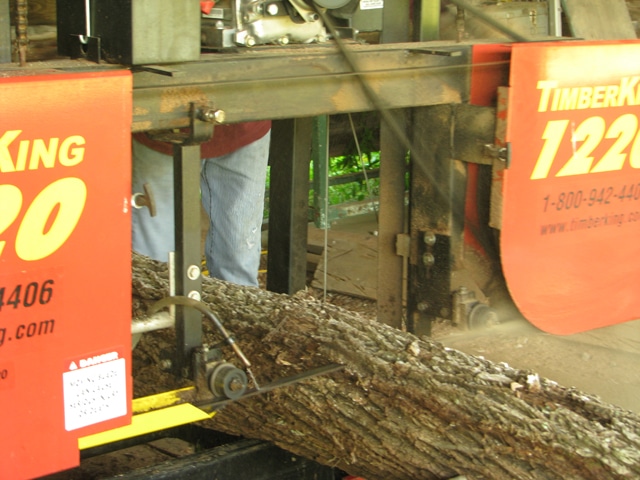
I’m not cutting many trees each year and the trees I cut are generally only 10” to 15” in diameter, so they are easy to handle and easy to saw into boards with my TimberKing 1220.
My management plan includes meeting all of ATFS’s nine management standards. By cutting no more trees each year than we resprout, we can easily meet the ATFS sustainability standard. When a tree is cut, and it’s in the right spot, I let it re-sprout and with 40 years of growth there’ll be another nice black walnut tree. I also do a lot of culling: thinning out black walnut trees that are too closely spaced with other trees, poorly shaped, or much slower growing than surrounding trees.
I bought my 1220 TimberKing in 2016 and started sawing that fall. Now I’m 73 and getting to the age where I want younger blood to do the cutting. I have a couple of sharp young guys who do more and more of the tree felling and log handling for me, and will soon do most of the sawing. These days I’m doing more management and less ‘back work.’
No market for small quantities of small diameter black walnut sawlogs
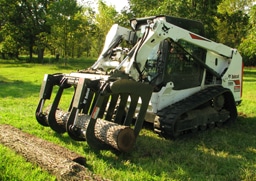
My experience is that professional loggers don’t want to bid on small quantities of small diameter logs – I can understand the economics of that. So I chose to do the logging and sawing myself. I select the trees to be cut, fell them, and move the logs from the field to my Timberking sawmill with a skid-loader with log grapple. I saw them, stack and sticker them, and let them air dry. Me and two helpers; it’s an entirely in-house operation.
Choosing the right sawmill
When I decided to saw my own logs, I had no idea of what kind of sawmill might be best. I talked to sawyers, looked online, and I stopped at the TimberKing plant in Kansas City. The TimberKing people were very helpful, knew a lot about sawing, and were willing to take the time to show me what the choices were. At the TimberKing facility I could also look at the various sawmills they offer, which helped me make the right decision.
I liked that TimberKings are American-made and especially that they’re made locally – I’m only 100 miles away from the factory.
For my needs, an entry-level mill works out quite well
I chose the 1220 in part because sawing logs into boards on my farm started out as an experiment. I wanted to see if it was feasible to saw and sell walnut boards a few at a time. And since I have to pay helpers I wanted to see if owning a mill could pay for itself. I wanted a low cost sawmill, easy to operate and maintain, and the 1220 has worked out quite well.
Of course, TimberKing has bigger mills with fancy features. I thought about one of their hydraulic mills but I decided not to go that way. For my needs, I’m happy with an entry-level, bottom-of-the line mill. That’s what I wanted and I’m happy with it.
I like that it’s solidly built. I can make accurate cuts even though it’s hand-operated. I use a skid loader to set the log on the mill so I don’t really need hydraulics; with my low production volume, low cost and ease of operation are key. I don’t need the features necessary for high volume sawing.
Tree farming takes persistence
For someone who’s thinking of tree farming, it’s best to think of where you want to end up before you start. Tree farming takes persistence. You have to work it year after year after year. Many people plant trees, but after a few years, give up because the trees grow so slowly.
But if you’re in your 30’s, you have patience and are willing to learn, and are realistic about income from the tree farm, it’s all good. It’s a wonderful way of life, living on and working a tree farm. I’m at the other end of a forty-year effort: I’m now cutting trees that were planned and planted long ago.
Keep your investments small
Keep your investments small, don’t look for big markets, learn from other tree farmers and professional organizations. When you have boards ready to sell, word of mouth is the best advertisement. I keep my prices reasonable, and am willing to cut to spec.
I am certainly satisfied with my TimberKing 1220. The TimberKing people are always easy to get in touch with and willing to provide the advice I need to keep things running smoothly. I like their friendliness.”
— Mike Trial, Missouri Tree Farmer of the Year, TimberKing 1220 Owner, Columbia MO
HAVE QUESTIONS? 3 ways we can help you
• Call us 1-800-942-4406
• Email us [email protected]
• Visit us on Facebook